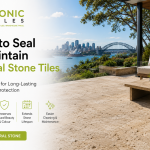




Crazy paving has a long history in Australian outdoor spaces, and it has earned its staying power. Where regular format tiles and pavers create clean, geometric order, crazy paving does something different: it brings the irregular, organic character of natural stone into the garden in a way that feels genuinely connected to the landscape around it.
The name suggests something improvised and chaotic. Done well, crazy paving is anything but. It requires careful planning, skilled laying, and good stone selection to achieve the relaxed, natural look that makes it so appealing. Iconic Tiles’ crazy paving range gives Sydney and Australian homeowners access to quality natural stone pieces across a range of stone types. Here is how to use crazy paving creatively and effectively in your outdoor space.
Shop the Iconic Tiles Crazy Paving Range Natural stone crazy paving for Australian gardens, paths, driveways and entertaining areas. Fast delivery available. |
What Is Crazy Paving?
Crazy paving is the practice of laying irregularly shaped pieces of natural stone in a random, mosaic-like pattern with mortar or sand-cement filling the joints between pieces. Unlike regular format tiles or pavers, the pieces used in crazy paving are not cut to standard dimensions. They are irregular in shape and size, and the skill of laying crazy paving lies in fitting those irregular pieces together in a way that looks intentionally natural.
The most common natural stones used for crazy paving in Australia include:
- Sandstone: the quintessential Sydney garden paving material. Warm golden and honey tones that suit the Australian landscape and light. Relatively soft and easy to work, making it accessible for skilled DIY laying
- Granite: harder, denser, and more durable than sandstone. Dark grey to silver tones. Excellent for driveways and high-traffic areas where sandstone might show wear
- Bluestone: the iconic Melbourne paving material, now widely used across Australia. Blue-grey tones with excellent durability. Often used in contemporary garden designs where its cooler tones suit a more sophisticated aesthetic
- Limestone: warm cream to buff tones with a fine grain and smooth face. Less commonly used than sandstone or granite for crazy paving but creates a refined, European-influenced outdoor aesthetic
- Slate: dark grey to charcoal with a layered texture and naturally cleft surface. Provides excellent slip resistance and a dramatically different aesthetic from the warmer stone types
Crazy Paving Ideas for Australian Outdoor Spaces
Idea 1: The Winding Garden Path
A winding garden path in crazy paving is one of the most naturally beautiful applications. The irregular stones perfectly suit a path that weaves through planting beds, between garden trees, or through a kitchen garden. The key design decisions are: the width of the path (wider paths feel more generous and are easier to walk two abreast; narrower paths create more of a discovery journey through the garden), the stone colour relative to the surrounding planting, and whether to plant low creeping groundcover into the gaps between stones to soften the overall look.
For Sydney gardens, sandstone crazy paving paths in warm golden tones work exceptionally well with the Australian native planting palette of greens and greys. For gardens with a more formal or Mediterranean character, limestone crazy paving with a finer texture reads as more refined.
Idea 2: The Relaxed Entertaining Area
Crazy paving used as the primary surface for an informal entertaining area brings a relaxed, resort-like character to a Sydney backyard. Rather than the strict geometry of a porcelain or concrete paved area, crazy paving gives the space an organic quality that works particularly well in gardens with mature trees, established planting, and a landscape that has developed its own character.
For entertaining areas, the practical requirements are slip resistance (check the specific stone and finish against P3 or P4 for outdoor use), adequate fall for drainage, and sufficient surface size for outdoor furniture. Stone selection should consider the colour relationship between the paving and the house exterior, the pool coping (if applicable), and the surrounding planting.
Idea 3: The Pool Surround
Crazy paving works beautifully around a pool, particularly a pool with an informal or naturalistic design. Tumbled or heavily textured natural stone irregular pieces provide the grip required for a wet pool surround. Travertine crazy paving has historically been one of the most popular pool surround crazy paving choices in Sydney: its warm tones, its characteristic texture, and its barefoot comfort in summer all contribute to its appeal.
For pool surrounds, sealing is particularly important for natural stone crazy paving given the constant water exposure. A high-quality penetrating sealer applied before the pool is filled and maintained regularly will significantly extend the life and appearance of the stone.
Idea 4: The Feature Driveway
Crazy paving driveways are less common than regular format paving in contemporary Sydney suburbs, but they make a genuinely striking statement in the right property context. For period-style homes, Federation properties, and houses in established suburban areas with mature gardens, a crazy paving driveway has an authenticity that regular paving or concrete cannot match.
The practical requirements for a driveway application are more demanding than for garden paths or entertaining areas:
- Stone selection must be appropriate for vehicle load: granite and dense sandstone are suitable. Softer limestone or slate should be assessed carefully for driveway use
- The mortar bed must be properly specified for vehicle loading, not just pedestrian use
- Edge retention is critical: without proper edging or restraint, the perimeter stones of a crazy paving driveway will shift under vehicle loading over time
- Fall and drainage must be carefully engineered to prevent water pooling on the drive
Idea 5: Garden Steps and Level Changes
Crazy paving used for garden steps and retaining walls creates an integrated, layered garden aesthetic that feels genuinely natural. Combining crazy paving treads and risers with dry stone walling or freestyle stone walling for the adjacent retaining structure creates a garden that reads as if it has grown organically from the landscape. The key is using the same or complementary stone throughout to maintain visual coherence between the different elements.
Idea 6: The Interior Courtyard
In Sydney’s terrace houses and courtyard homes, crazy paving in a small internal courtyard references the city’s sandstone heritage and creates an immediate connection to the original character of the area. A sandstone crazy paving courtyard with a small garden bed, a mature standard tree, and simple outdoor furniture is one of the most classic and effective small garden treatments for Sydney inner-city properties.
Design Tips for Crazy Paving That Works
- Plan your joint width: very tight joints give a more refined look; wide joints give a more rustic and informal character. Decide before ordering whether you want a tight or a loose layout and discuss this with your installer
- Consider the piece size range: larger average piece size creates a more resolved look; smaller pieces create a more mosaic-like pattern. For large areas, a broader range of piece sizes looks most natural
- Plant into the joints: low creeping plants (thyme, baby’s tears, mondo grass) planted into the joints of a garden crazy paving path soften the overall look and can withstand occasional foot traffic. This works in informal garden areas rather than high-traffic entertaining zones
- Edge the area properly: the perimeter of any crazy paving installation must be restrained with a proper edging course to prevent the outer pieces from shifting over time
- Use the stone’s natural character: orient irregular pieces so that the most interesting or beautiful face is uppermost and visible
Browse the Iconic Tiles Natural Stone Range Crazy paving, travertine, dry stone walling and more. Quality natural stone for Australian outdoor spaces. |
Frequently Asked Questions
Yes. Crazy paving is one of the most naturally suited materials for Sydney backyards given the local sandstone heritage, the Australian garden aesthetic, and the warm outdoor lifestyle that Sydney properties support. The right stone selection for your specific garden style and use requirements is the key decision. Browse the Iconic Tiles crazy paving range or book a consultation to discuss stone options for your garden.
Crazy paving can be laid by skilled DIY homeowners with patience and a willingness to learn the technique. The fitting of irregular pieces requires time and artistic judgment that regular tile laying does not. For large areas, structurally important surfaces (steps, driveways), and pool surrounds, professional installation is strongly recommended. For small garden path sections in informal areas, an experienced DIY installer can achieve good results with appropriate preparation.
The most effective weed prevention is a fully mortared joint. Sand-only or loose joints in crazy paving will establish weed growth more quickly. For mortared joints, any weeds that appear are growing from seeds falling onto the surface rather than from below, and they are relatively easy to manage with spot removal. A polymeric jointing sand (for loose-joint areas) also reduces weed establishment compared to regular sand.